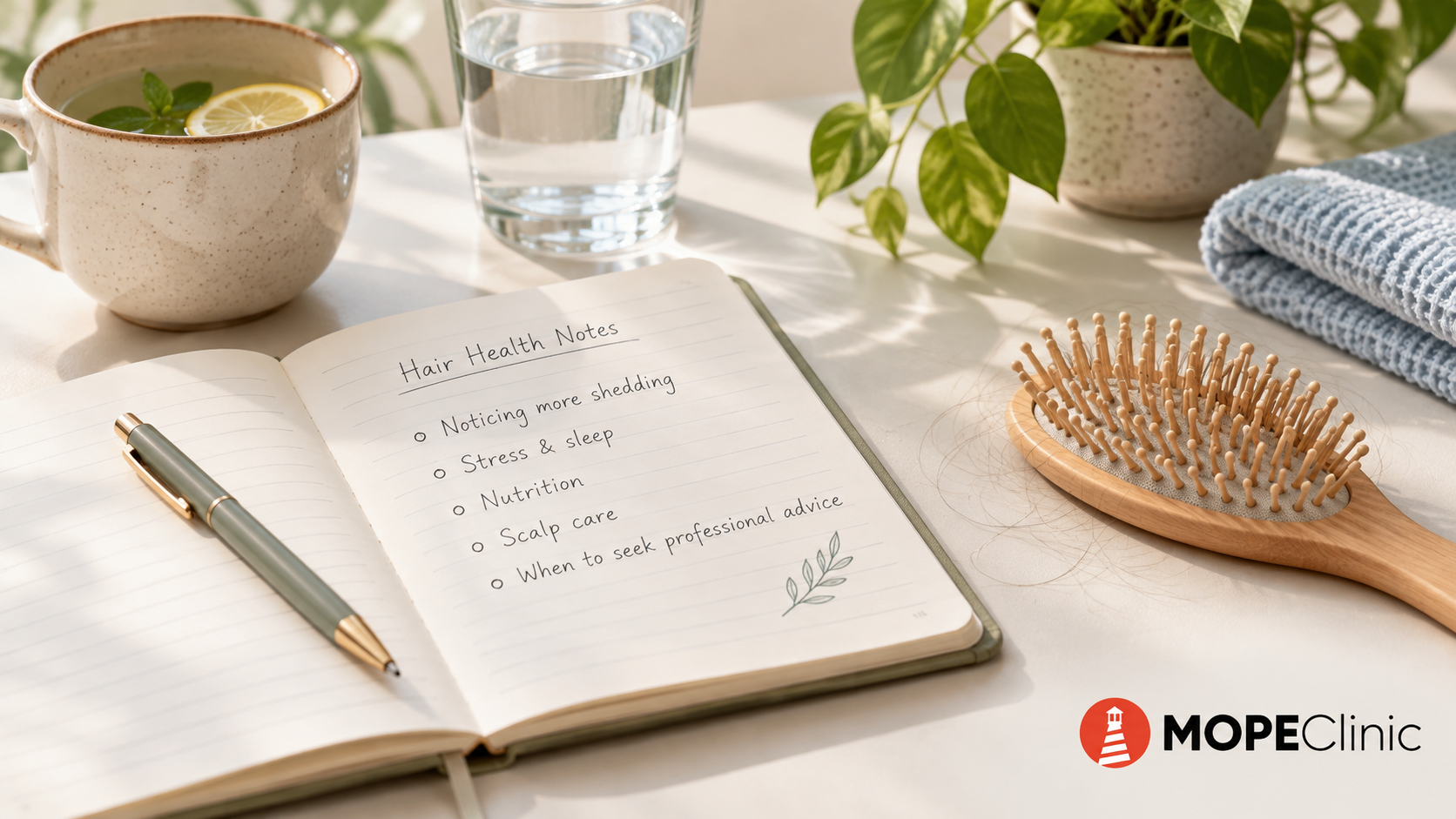
Metairie clinic explains temporary hair shedding, nutritional concerns, practical care tips, and signs that may warrant medical evaluation.
NEW ORLEANS, LA, UNITED STATES, October 26, 2026 /EINPresswire.com/ — MOPE Clinic, a concierge healthcare practice based in Metairie, Louisiana, is issuing a community education tip sheet addressing hair shedding that may develop after significant changes in weight, nutrition, illness, or other physical stressors. The information explains common causes of excessive shedding, practical ways to document symptoms, gentle hair-care habits, and circumstances in which professional medical evaluation may be appropriate.
The educational resource is intended for adults throughout Greater New Orleans and South Louisiana, including Metairie, Kenner, New Orleans, Slidell, Mandeville, Covington, and surrounding communities.
Hair shedding can cause concern, particularly when it appears unexpectedly after an important health or lifestyle change. However, increased shedding does not always indicate permanent hair loss. Understanding the normal growth cycle and identifying possible triggers can help healthcare professionals determine whether the changes are temporary or require further investigation.
### Why Hair Sometimes Sheds Months After a Physical Change
Human hair grows in cycles. Individual follicles move through periods of active growth, transition, and rest before the hair eventually sheds. This process occurs continuously, making some daily shedding normal.
According to the American Academy of Dermatology, losing approximately 50 to 100 hairs per day is common. However, a major physical or emotional stressor can cause additional hairs to enter the resting phase around the same time.
Several months later, those hairs may shed more noticeably. This condition is called telogen effluvium, a form of excessive shedding that may occur after significant weight loss, illness, surgery, childbirth, or substantial emotional stress.
The delayed timing often makes the cause difficult to recognize. A person experiencing hair shedding in October, for example, may need to consider health or lifestyle changes that occurred during the summer.
Importantly, the condition differs from hereditary hair thinning, autoimmune hair disorders, and inflammatory scalp conditions. More than one cause can also be present simultaneously.
### Understanding the Connection Between Nutrition and Hair Health
Hair follicles depend on normal biological processes that require adequate nutrition. During periods of reduced food intake or significant dietary change, meeting nutritional needs may become more challenging.
Protein is an important component of normal tissue growth and repair. Iron and other nutrients also support essential biological functions. When food intake becomes restricted, certain deficiencies may develop in susceptible individuals.
Nevertheless, hair shedding alone does not confirm a nutritional deficiency. Thyroid disorders, inherited conditions, medications, recent illness, and other factors may contribute.
The National Library of Medicine’s clinical review of telogen effluvium explains that evaluation generally begins with a detailed medical history and physical examination. Testing for thyroid dysfunction, iron deficiency, or other conditions may be considered when the clinical findings support it.
A complete evaluation therefore looks beyond cosmetic concerns and considers the person’s overall health.
### Practical At-Home Tips for Monitoring Hair Shedding
MOPE Clinic’s educational information emphasizes practical observations that individuals can discuss with healthcare professionals. These activities are not intended to diagnose hair disorders or replace clinical assessment.
**1. Keep a simple symptom timeline.**
Recording approximately when shedding began can help identify possible triggers. Useful information may include recent illness, surgery, substantial weight changes, changes in appetite, and new medications.
**2. Observe the pattern rather than counting every hair.**
Diffuse shedding across the scalp may look different from distinct bald patches, gradual recession around the hairline, or thinning concentrated in one location. Describing the pattern may provide more useful information than repeatedly counting individual strands.
**3. Use consistent photographs when appropriate.**
Occasional photographs taken under similar lighting and from similar angles can help document visible changes. Excessive daily checking may be misleading because hairstyle, lighting, and wetness can dramatically change the appearance of hair density.
**4. Review everyday eating patterns.**
A varied diet containing suitable protein sources, vegetables, fruit, and other nutrient-rich foods may help maintain nutritional adequacy. Persistent nausea, poor appetite, or difficulty eating enough should be discussed with a clinician.
**5. Practice gentle hair care.**
The American Academy of Dermatology recommends gentle shampooing, conditioning, limiting high-heat styling, and avoiding hairstyles that pull tightly on the hair. These measures may reduce breakage and additional damage.
**6. Avoid unnecessary changes to prescribed treatment.**
When shedding develops during medical treatment, the prescribing clinician should evaluate whether medication, weight changes, other conditions, or multiple factors may be involved. Abrupt medication changes without professional guidance can introduce additional risks.
**7. Prepare questions before a medical appointment.**
A short written summary of symptom timing, scalp changes, recent medical events, and current medications can make conversations with healthcare professionals more productive.
### Common Hair-Care Mistakes to Avoid
Hair shedding may lead individuals to change multiple products or routines at once. However, introducing numerous products simultaneously can make it harder to identify irritation or determine whether a particular change is helpful.
Repeatedly brushing or pulling on the hair to measure shedding may also increase breakage or unnecessary concern.
Another common misconception is that every episode of shedding requires immediate laboratory testing. Testing is most useful when guided by clinical history, examination findings, and potential causes.
Similarly, washing hair less frequently does not necessarily prevent shedding. Hairs that have already completed the growth cycle may simply become more noticeable during the next wash.
### When Medical Evaluation Becomes Important
Some forms of temporary shedding improve after the triggering condition resolves. However, sudden bald patches, scalp redness, inflammation, pain, or steadily worsening thinning may suggest another condition.
Unexplained fatigue, dietary restriction, significant unintended weight changes, or other systemic symptoms may also warrant assessment.
A clinician may review medical history, conduct a scalp examination, consider appropriate laboratory testing, or recommend dermatology evaluation.
The American Academy of Dermatology notes that many people experiencing temporary excessive shedding regain their usual hair fullness after the stressor resolves. Nevertheless, recovery varies, especially when an underlying condition remains active.
### Frequently Asked Questions About Hair Shedding
**What is the difference between normal shedding and excessive shedding?**
Some daily hair loss is expected as part of the growth cycle. Excessive shedding occurs when more hairs than usual leave the scalp over a period of time. A dermatologist can help determine whether the change represents temporary shedding or another condition.
**Can significant weight loss contribute to hair shedding?**
Yes. Major weight changes may act as a physical stressor that contributes to telogen effluvium. Other medical and nutritional causes may also be involved.
**Why can hair shedding begin months after an illness or major change?**
Hair follicles respond to physical stress through changes in their growth cycle. The affected hairs may remain in place temporarily before shedding becomes noticeable several months later.
**Does increased shedding always indicate permanent hair loss?**
No. Some forms of excessive shedding are temporary. However, hereditary hair loss and certain inflammatory or autoimmune conditions may require different evaluation and treatment.
**Can inadequate nutrition affect hair health?**
Yes. Insufficient energy intake or certain nutritional deficiencies may contribute to hair problems. However, adequate nutrition does not eliminate every possible cause of shedding.
**Will eating additional protein automatically stop hair loss?**
No. Adequate protein is important for overall health, but increasing protein intake cannot be assumed to reverse hair loss when the cause is unrelated to inadequate nutrition.
**How can adults care for fragile hair at home?**
Gentle washing, conditioning, reducing excessive heat exposure, and limiting tight hairstyles may help reduce breakage. These habits support hair care but do not replace medical treatment when an underlying disorder is present.
**Should shedding be monitored with daily photographs?**
Occasional photographs under consistent conditions may help document changes. Daily photographs are often unnecessary and may exaggerate normal differences in lighting, styling, and hair positioning.
**When should a dermatologist evaluate hair loss?**
Professional evaluation may be particularly important when hair loss occurs in patches, progresses rapidly, involves scalp discomfort or inflammation, or continues without an identifiable explanation.
**Can hair fullness return after temporary shedding?**
Many cases of telogen effluvium improve once the underlying trigger resolves. The American Academy of Dermatology notes that fullness often returns over several months, although the timeline and degree of recovery vary.
### Health Education for Greater New Orleans and South Louisiana
MOPE Clinic’s educational initiative encourages a broader view of health changes rather than attributing every new symptom to a single cause.
For adults throughout Greater New Orleans and South Louisiana, documenting changes, maintaining appropriate nutrition, and seeking professional guidance when symptoms persist can support more informed healthcare discussions.
MOPE Clinic maintains a physical practice in Metairie, Louisiana, providing individualized concierge healthcare services by appointment.
Additional information about possible hair shedding during medically supervised weight changes is available in the related MOPE Clinic blog post, “GLP-1 Hair Loss: Why Hair Shedding Happens During Weight Loss,” once its publication is confirmed.
### About MOPE Clinic
MOPE Clinic, formally known as Metairie Optimal Performance Enhancement, is a concierge healthcare practice based in Metairie, Louisiana. Chris Rue, FNP-C, provides individualized care focused on hormone health, medical weight management, and related wellness concerns.
The clinic serves Greater New Orleans and South Louisiana. Concierge visits are available by appointment only.
Website: https://mopeclinic.com/
###
Gwen M.
Designs For You
Visit us on social media:
Facebook
Legal Disclaimer:
EIN Presswire provides this news content “as is” without warranty of any kind. We do not accept any responsibility or liability
for the accuracy, content, images, videos, licenses, completeness, legality, or reliability of the information contained in this
article. If you have any complaints or copyright issues related to this article, kindly contact the author above.

Media gallery