
Chengdu, Sichuan Province, China-November 9.2026
Introduction: A piece of news worth careful reading by all practitioners in the field of phototherapy
Light is more than just a medium that allows us to perceive the world; it also plays a role in the transmission of signals within living organisms. Science is gradually uncovering the answers to key questions: Where does light act? Through what mechanisms? And what are the resulting effects?
However, the more exciting a discovery is, the more crucial it becomes to describe it with precision.
About us
GuangDuoDuo is a leading domestic enterprise specializing in the R&D of multispectral photodynamic technology, the manufacturing of multispectral wellness products, and the operation of brain health management services. Dedicated to the research and application of “multispectral photodynamic technology and human health,” the company operates under the mission of “bringing the benefits of light-based health to everyone” and aims to build a new health industry ecosystem centered on the integration of supercomputing, AI, and light technology.
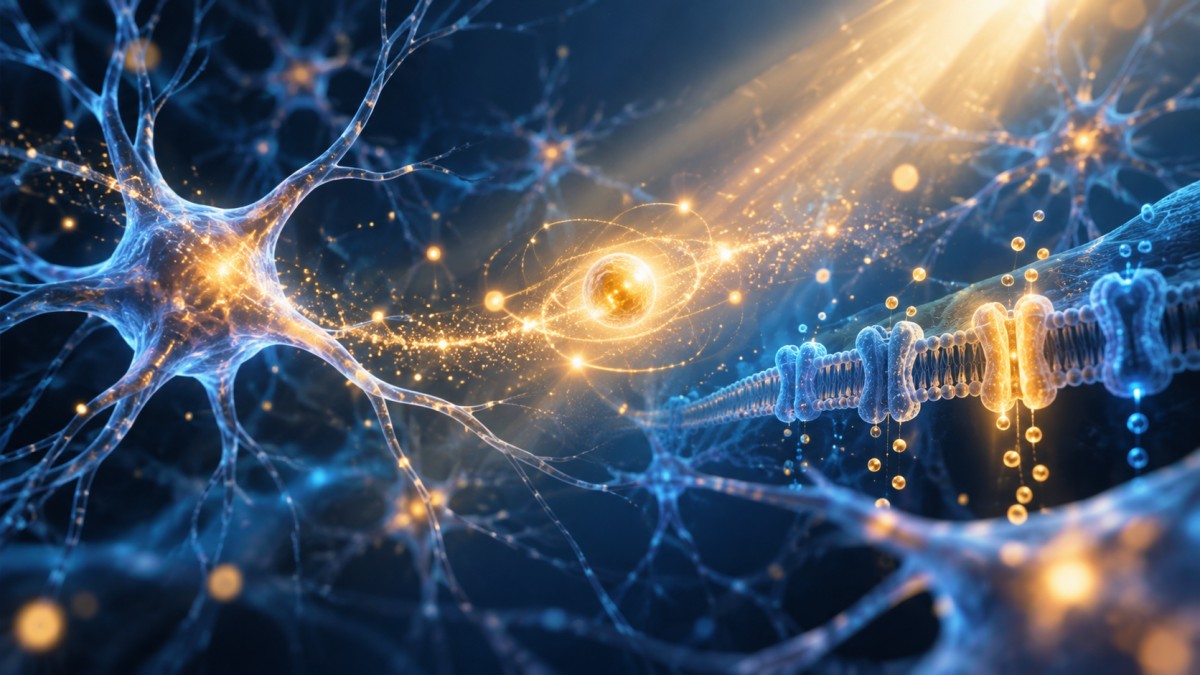
The Nobel Prize in question was not awarded for a specific type of “wellness phototherapy,” nor did it prove that routine phototherapy can alter human genes. Rather, it recognizes the discovery of light-gated ion channels and the development of optogenetics—a method that enables researchers to precisely intervene in the activity of specific cells using light.
What does this mean for the phototherapy industry? It underscores the need for a deeper understanding of the actual mechanisms governing the interaction between light and life, and it demands a rigorous approach toward every scientific discovery. After all, only by clearly articulating these mechanisms can we build truly robust and reliable products.
1.2017 and 2026: Two Paths, One Direction
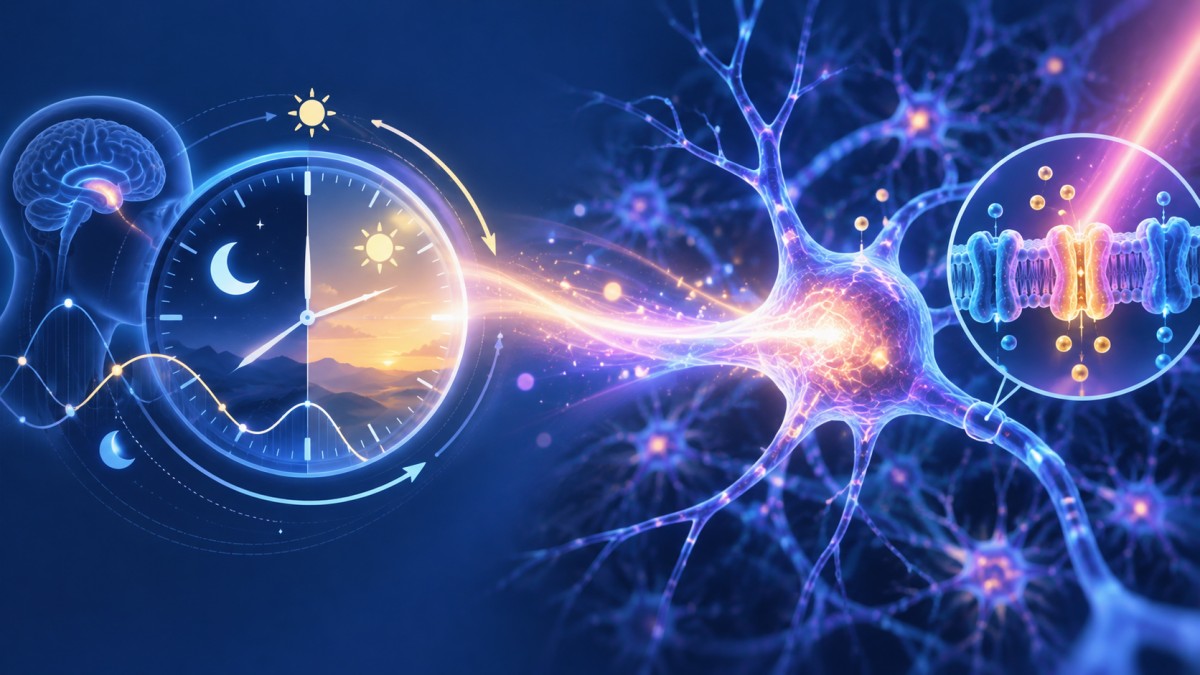
In 2017, Jeffrey C. Hall, Michael Rosbash and Michael W. Young won the Nobel Prize in Physiology or Medicine for their discovery of the molecular mechanisms that control circadian rhythms. What their research tells us: The biological clock is not an abstract metaphor. Gene expression, protein accumulation and feedback regulation in cells can form a continuously running rhythmic mechanism, allowing organisms to adapt to day and night changes in advance. These mechanisms are closely related to physiological processes such as sleep, hormone secretion, body temperature, and metabolism.
It must be clarified here: what won the award in 2017 was the molecular mechanism of the biological clock, not the health effects of a certain lighting product, nor was it the first time that light was discovered to affect the human body.
How light enters the rhythm regulation system also involves another line of research. Pivotal research published in 2002 revealed retinal ganglion cells that sense their own light and their connection to regulation of the circadian clock. This provides an important basis for later understanding the non-imaging effects of melanopsin, ipRGC and light.
In 2026, Karl Deisseroth, Peter Hegemann and Georg Nagel won the prize, which allows us to see another possibility: using photosensitive proteins to turn specific cells into objects that can accept light instructions. [1]
Winning twice is not consecutive proof of the same mechanism. One reveals how life keeps time; the other develops tools for interfering with cellular activity with light. For light research, together they broaden the way we understand life.
2. Optogenetics: Let light become instructions for cells
The key to this research lies in light-sensitive proteins found in microorganisms.
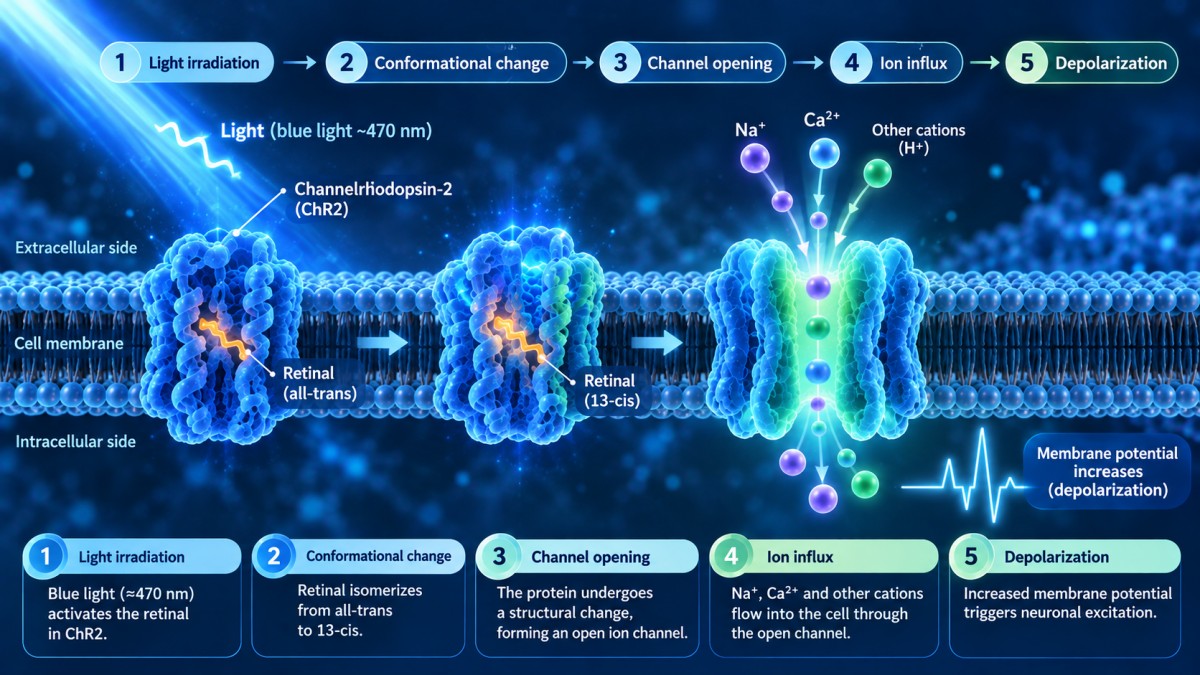
Take, for example, channelrhodopsin-2 (ChR2) from green algae: it functions both as a light sensor and as an ion channel embedded in the cell membrane. A 2003 study demonstrated that when expressed in animal cells, ChR2 allows light to directly open the channel, facilitating the transmembrane flow of cations.
Subsequently, researchers introduced the genes encoding such proteins into neurons. Cells that previously lacked this light-sensing capability thus gained an interface for optical control.
The chain of events is as follows:
Light-sensitive protein absorbs photons → protein undergoes a conformational change → channel opens → ions flow → membrane potential shifts → the neuron may fire an action potential.
The actual absorption of photons occurs via a retinal molecule—a light-sensitive chromophore—embedded within the protein. Upon absorbing light, this molecule undergoes isomerization, driving the protein into different photochemical states and altering the conductance of the channel. In a typical neuron at rest, the opening of ChR2 generates a net inward flow of cations, causing the cell to depolarize. Once a specific threshold is reached, the cell’s endogenous voltage-gated channels trigger an action potential.
In this context, light serves as a triggering signal. The resulting neuronal firing remains dependent on the cell’s existing ion gradients, electrophysiological state, and channel systems.
In 2005, a landmark study by Boyden, Deisseroth, Nagel, and colleagues demonstrated the ability to control neuronal firing on a millisecond timescale using short pulses of light.[2] Since then, researchers have developed light-driven inhibitory tools, enabling them to not only initiate neuronal activity but also suppress it.
The core insight of this mechanism is that the action of light involves specific targets and pathways. It is not merely a general “illumination,” but a precise “intervention.” This is the very foundation upon which the scientific approach to phototherapy is built.
3. Bringing science into daily life, and rigor into our products

Research into light is continuously expanding our understanding of life.
Our responsibility is to interpret these findings accurately—neither overlooking them nor transforming them into promotional claims that exceed what the evidence supports.
As practitioners in the field of light therapy, we recognize that a Nobel Prize is not merely a “seal of health” to be affixed to a product. Rather, it demonstrates how the patient, persistent exploration of a fundamental question can lead to discoveries that transform research methodologies.
The relationship between light and health involves mechanisms that can be studied and outcomes that can be empirically tested.
The future value of the light therapy industry will depend on our ability to translate this knowledge into designs and applications that can withstand rigorous validation.
Our Commitment
In the realm of light-based health, we pledge to:
Clarify Mechanisms—Distinguish between the specific pathways of various photobiological effects, ensuring no confusion or exaggeration.
Respect Evidence—Promote only those functions supported by clinical research, and avoid making claims that go beyond the available evidence.
Drive Validation—Establish a comprehensive, evidence-based chain—from initial design and precise measurement to real-world verification.
Foster Professional Collaboration—Work alongside researchers, standards experts, designers, and enterprises to elevate the scientific literacy of the entire industry.
Light does more than just illuminate the world; it is becoming an essential tool for understanding life and improving human health.
We are committed to being practitioners who communicate science with precision and develop products with integrity.

Media Contact
Company Name: Brain Health Spectrum (Chengdu) Artificial Intelligence Technology Co., Ltd.
Contact Person: Media Relations
Email: Send Email
Country: China
Website: https://www.gddredlight.com/
Press Release Distributed by ABNewswire.com
To view the original version on ABNewswire visit: GUANGDUODUO:Light, Life’s Language: Phototherapy Views the 2026 Nobel Prize


