
Key Takeaways
- Homeowners don’t hire the fastest restoration company – they hire the one they already trust, and that trust is built long before the phone rings.
- Story-driven content that explains why methods work is more persuasive than any equipment list or slogan, because it turns invisible expertise into visible proof.
- The insurance claims process is one of the biggest reasons customers hesitate – plain-language content that clarifies it removes that barrier before it costs you the job.
- Profit Acuity outlines how restoration companies can use narrative content to stop competing on price and start winning on trust – a full breakdown is available at their resource here.
- Generic service pages leave restoration companies invisible when buyers are forming their shortlist – specific, story-based answers to real crisis questions are what get found and remembered.
Trust Wins Jobs Before the Phone Rings
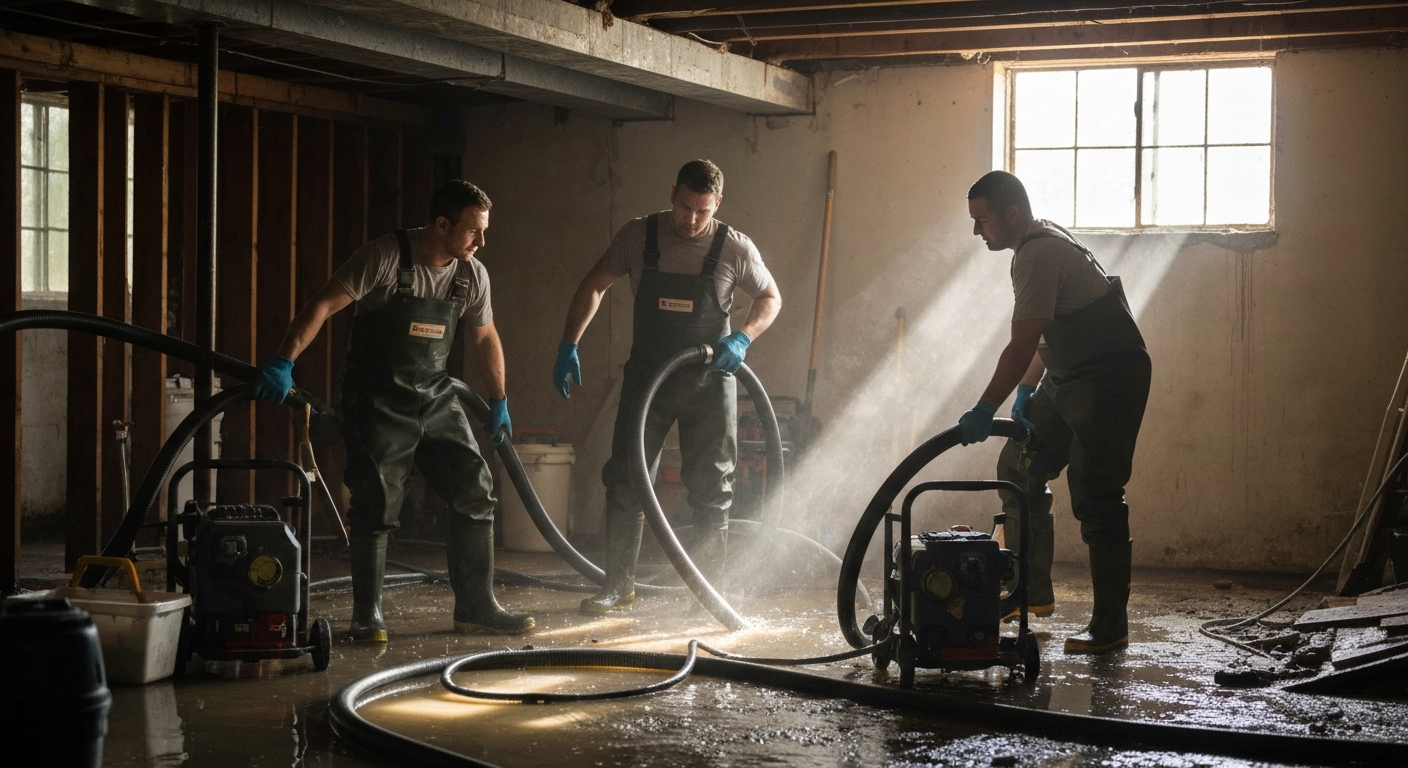
A homeowner standing in a flooded basement at midnight is not comparing drying equipment specs. They are trying to figure out one thing: who can I trust to handle the worst week of my year? That question gets answered – or not – by whatever content they find before they ever dial a number.
Most restoration companies compete on speed and equipment, which means most restoration companies look identical online. When every website says “certified technicians,” “state-of-the-art equipment,” and “24/7 response,” none of those claims carry weight anymore. The differentiator is the story behind the badge, not the badge itself.
Restoration is a high-stakes, low-familiarity purchase. The buyer has never done this before, they’re emotionally rattled, and they have no technical framework to evaluate quality. In that environment, trust is the actual deciding factor. Content that tells the story of what a homeowner is about to go through – honestly and clearly – is what builds that trust at scale.
Homeowners Hire Who They Can Picture
When someone is disoriented by property damage, familiarity feels like safety. That’s the emotional reality restoration marketers are working with.
Why Service Lists Fail Scared Buyers
A bullet-pointed list of services – water extraction, structural drying, mold remediation – does nothing to calm a frightened homeowner. It reads the same as every competitor’s page and gives no reason to choose one company over another. Service lists describe what a company does, but a scared buyer needs to understand what will happen to them.
Walking Through the Job Builds Familiarity
Narrative “what to expect” content changes the equation. When a piece of content walks a reader through an actual job – the arrival, the initial assessment, the containment setup, the drying phase, the rebuild – they can mentally picture your crew in their home. That mental picture is powerful. Familiarity reduces fear, and reduced fear is what moves someone from browsing to calling.
The practical move: Write a narrative walkthrough for each loss type (water, fire, mold, storm) in plain language. Describe the people, the decisions, and the reassurances – not just the machines involved.
The Insurance Fog Loses You Good Customers
For many homeowners, the damage itself is not the scariest part. The insurance claim is.
Fear of the Claim Causes Hesitation
“Will my insurance cover this?” “What if the adjuster lowballs the estimate?” “Who actually pays, and when?” These questions run on a loop the moment homeowners start assessing damage. That uncertainty causes people to freeze, delay, or hand the job to whoever sounds most confident on the phone – even if that confidence is just bluster.
Plain-Language Guides Remove That Barrier
Content that explains the claims process clearly – how documentation works, what direct billing looks like, what the homeowner is actually responsible for – removes the single biggest reason people hesitate. Industry guides on restoration claims communication consistently show that companies positioning themselves as knowledgeable partners in the insurance process are far more likely to convert anxious prospects into committed clients.
The practical move: Publish a straightforward guide to the restoration claims process, told as a story of one real claim moving from first call to final payment. Make it the resource a confused homeowner would actually want to read at 11 p.m.
“24/7 Response” Is a Claim Without Proof
Every restoration company makes this promise. Which is exactly why it no longer means anything.
Documented Timelines Turn Slogans Into Evidence
A homeowner reading three websites at 2 a.m. sees the same “24/7 Emergency Service” badge on all of them. There’s no way to know who actually shows up. A story is different. A documented account of a real overnight callout – call received at 1:14 a.m., crew dispatched by 1:22, on-site at 2:05, water extraction started by 2:15 – transforms a generic claim into credible, specific proof.
Specifics are what make speed believable. Best practices in emergency response documentation confirm that detailing actual timelines and first-response actions is far more persuasive than any badge or promise. Document a genuine emergency response with real timestamps and steps. That one piece of content does more trust-building work than a year of taglines.
Buyers Judge Competence by How You Explain It
Homeowners cannot evaluate whether a drying protocol meets IICRC standards or whether mold containment was been done correctly. They don’t have the expertise. So they use a proxy: how clearly and honestly the work is explained.
Jargon Signals Vague Work
Vague, technical-sounding copy – “advanced psychrometric analysis” with no further explanation – does not impress non-experts. It creates distance and quiet suspicion. If the explanation is murky, the assumption is that the work might be too. Consumer insight research consistently shows that jargon-heavy content makes homeowners feel talked at rather than informed, which erodes trust rather than building it.
The “Why” Behind Methods Signals Expertise
Content that teaches the reasoning behind restoration methods signals deep competence. Explaining why proper structural drying prevents secondary mold growth, or why containment barriers matter during remediation, tells the reader something important: this company understands the job well enough to make it simple. That’s exactly the person a homeowner wants in their home. Create explainer content around the “why” of your most important methods – and your expertise becomes visible before the estimate is ever written.
Your Best Outcomes Are Invisible Without Stories
Before-and-After Results That Actually Persuade
Restoration companies produce dramatic transformations constantly – and then let that proof disappear on a technician’s phone. A gutted, water-soaked home becoming a finished, livable space is the single most persuasive asset a restoration company owns. Most of it never gets used.
A written case story – the situation, the challenge, what was done, and the outcome – lets a prospect experience that transformation vicariously. It answers the question “can they really fix something this bad?” with a documented yes. Pair the narrative with before-and-after photos and, wherever possible, the homeowner’s own words. Visual content combined with a real story is the gold standard in restoration content marketing, according to content strategy research in the field.
Build a handful of detailed project stories around the most difficult saves. Those are the jobs that prove capability – and they’re the ones that silence price objections before they’re even raised.
Story-Driven Content Ends the Race to the Lowest Bid
When two restoration companies look identical on paper, price becomes the tiebreaker. Competing on price in restoration is a losing strategy – the discount almost always comes out of the quality of the work, and the customer who chose cheap rarely becomes a repeat client or a referral source.
Story-driven content gives buyers a reason to choose that has nothing to do with the bottom line of an estimate. Research indicates that consumers are more likely to trust companies that are transparent about their processes and operations, with some studies showing that 94% of consumers are more loyal to transparent brands. That transparency – built through narrative content, documented timelines, plain-language guides, and honest case stories – is what shifts the decision from “who’s cheapest” to “who do I trust.”
Profit Acuity’s framework for restoration content makes the point directly: when a company’s process, standards, and track record are legible through its content, the value is already established before the sales conversation starts. That protects margin, attracts better-fit clients, and removes the pressure to compete on speed alone. The companies that invest in telling the story of their work stop being one of three bids – and start being the company a homeowner was already hoping to find.
For restoration companies ready to build content that actually converts, Profit Acuity provides the tools and strategy to turn real job outcomes into trust-building assets that work around the clock.
Profit Acuity
+1 877 624 1229
Concord Drive
Center Valley
PA
18034
United States


